
How AI is Revolutionizing Prior Art Search
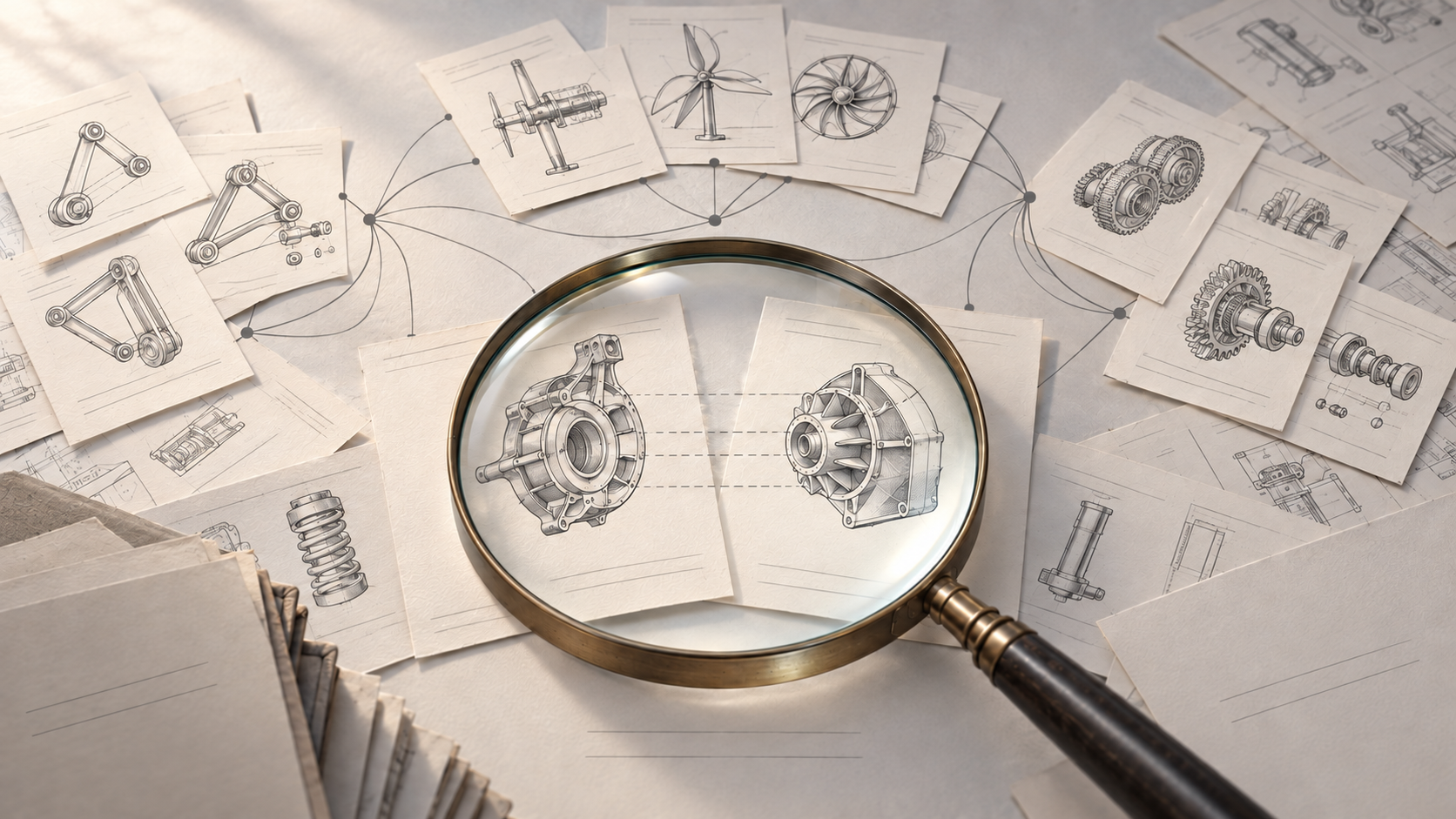
Prior art search has long been one of the most time-consuming and critical tasks in patent prosecution. Traditionally, patent professionals would spend hours—sometimes days—manually searching through databases, reading through countless documents, and trying to identify relevant prior art that could affect the patentability of an invention.
The landscape is changing. Artificial intelligence is fundamentally transforming how prior art searches are conducted, offering unprecedented speed, accuracy, and comprehensiveness.
The Traditional Approach
Before AI, prior art searches relied heavily on:
- Keyword-based searching in patent databases
- Manual classification browsing through patent class codes
- Citation chasing from related patents
- Expert knowledge of the technical field
While these methods are still valuable, they have inherent limitations. Human searchers can only process so many documents, and keyword searches often miss relevant art that uses different terminology.
How AI Changes the Game
Modern AI-powered prior art search tools leverage several key technologies:
Semantic Understanding
Unlike traditional keyword matching, AI systems understand the meaning behind patent claims and technical descriptions. This means they can find relevant prior art even when different terminology is used to describe the same concept.
Vector Embeddings
AI models convert patent documents into high-dimensional vector representations, allowing for similarity comparisons that go far beyond surface-level text matching. Documents with similar technical concepts cluster together in this vector space.
Large Language Models
The latest generation of LLMs can:
- Parse complex patent claims and extract key technical features
- Identify the technical problem being solved
- Find analogous solutions in different fields
- Generate comprehensive search reports
Best Practices for AI-Assisted Prior Art Search
While AI is powerful, it's a tool that requires skilled operators. Here are some best practices:
- Start with a clear understanding of the invention's core technical contribution
- Use AI as a force multiplier, not a replacement for human judgment
- Verify AI findings with manual review of key documents
- Iterate on search strategies based on what the AI discovers
- Document your methodology for reproducibility and defensibility
The Future of Prior Art Search
As AI continues to evolve, we expect to see:
- Real-time prior art monitoring during patent drafting
- Predictive analytics for patentability assessments
- Cross-lingual search that breaks down language barriers
- Integration with patent offices for more efficient examination
The goal isn't to replace patent professionals—it's to augment their capabilities, allowing them to focus on high-value analysis while AI handles the heavy lifting of document discovery.
At FlowLeap, we're building tools that bring these AI capabilities directly into the patent workflow. Our prior art search feature combines cutting-edge AI with an intuitive interface designed for patent professionals.